

MIDDLE EAST — Iran has formally rejected the United States’ 15-point ceasefire proposal and issued five counter-demands, including a claim of sovereignty over the Strait of Hormuz, according to an Iranian official.
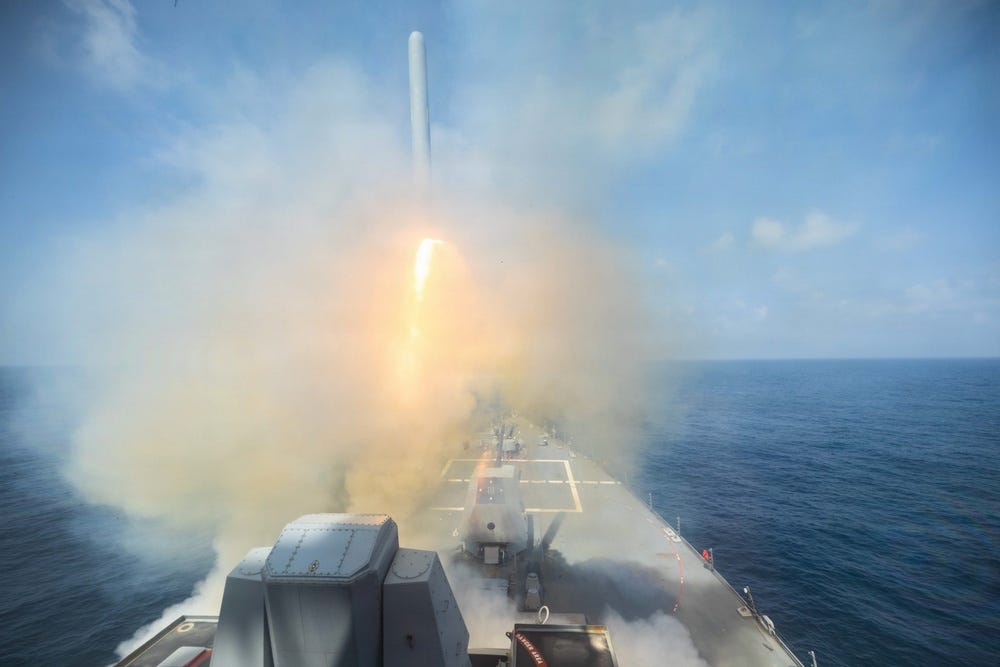


The rejection came as a Pentagon spokesperson confirmed elements of the 82nd Airborne Division, approximately 2,000 paratroopers, are deploying to the U.S. Central Command (CENTCOM) area of responsibility.
Pakistan’s Foreign Minister and Deputy Prime Minister Ishaq Dar confirmed on March 26 that Pakistan is serving as the primary intermediary between Washington and Tehran, conveying messages between the parties.
Dar noted that “the US has presented 15 points which Iran is currently reviewing,” with Turkey and Egypt providing supporting roles.
CENTCOM Commander Admiral Brad Cooper reported in a March 25 video update that U.S. forces have struck more than 10,000 Iranian targets since Operation Epic Fury began on February 28, nearly doubling the 5,500 figure reported on March 11.
Cooper added that 92 percent of Iran’s largest naval vessels have been destroyed and over two-thirds of its missile, drone, and naval production facilities have been damaged or degraded.
Iran’s Ceasefire Counterproposal and Hormuz Sovereignty Demand
The five counter-demands issued through Press TV, attributed to an anonymous senior Iranian official, include a halt to the killing of Iranian officials, safeguards against future attacks on Iran, reparations for the war, an end to hostilities across all fronts including allied groups, and Iran’s “exercise of sovereignty over the Strait of Hormuz.”
The Hormuz demand carried specific language: “Iran’s exercise of sovereignty over the Strait of Hormuz is and will remain Iran’s natural and legal right, and it constitutes a guarantee for the implementation of the other party’s commitments, and must be recognized.”
The official added that “Iran will end the war when it decides to do so and when its own conditions are met.”
Iranian Foreign Minister Abbas Araghchi confirmed that no direct negotiations with the United States are planned or underway. Iran characterized the U.S. 15-point plan as “maximalist” and “unreasonable.”
On March 26, President Trump announced a 10-day extension of the pause on strikes against Iranian energy infrastructure, pushing the deadline to April 6 at 8 p.m. Eastern Time. Trump stated Iran had requested the extension and that Tehran had allowed several oil tankers through the Strait of Hormuz, which he characterized as a signal of engagement.
Assessment: The Hormuz sovereignty demand goes beyond standard ceasefire terms. Iran is attempting to convert a military conflict into a permanent legal concession over the waterway that handles roughly 20 percent of global oil transit, according to the U.S. Energy Information Administration.
The demand functions as both a negotiating anchor and a signal that Tehran views the current conflict as leverage for long-term strategic gains, not merely a war to be ended.
The April 6 deadline creates a defined window for diplomatic progress. Iran’s request for the extension, despite publicly rejecting the 15-point plan, indicates Tehran is maintaining a back channel even as it postures publicly.
The reparations demand is also novel and has no precedent in recent Middle Eastern ceasefire negotiations.
Pakistan’s Lead Mediation Role
Foreign Minister and Deputy Prime Minister Ishaq Dar confirmed Pakistan’s mediation role in a statement on March 26. “Pakistan is playing a crucial mediatory role by conveying messages between the parties,” Dar stated.
He described the effort as dismissing “unnecessary media speculation” about the status of talks and added that “negotiations and diplomacy are the only paths to ensure lasting peace.”
Dar specified that Turkey and Egypt, along with other states, are providing “full support” in a supporting capacity. This is the first public, named confirmation that indirect U.S.-Iran talks are underway through a specific intermediary.
Assessment: Pakistan’s role as lead mediator rather than Egypt shifts the diplomatic dynamic. Islamabad maintains working relationships with both Tehran and Washington, and Pakistan’s nuclear-armed status gives it a different weight at the table than Cairo.
The fact that Dar made a public statement suggests Pakistan wants credit for the mediation effort, which may indicate the channel is producing enough progress to be worth claiming.
82nd Airborne Deployment and Kharg Island as Possible Objective
A Pentagon spokesperson confirmed on March 25 that elements of the 82nd Airborne Division headquarters, division enablers, and the 1st Brigade Combat Team (BCT) are deploying to the CENTCOM area of responsibility.
The deployment involves approximately 2,000 paratroopers drawn from the Immediate Response Force (IRF), a quick-reaction element of the division’s 3,000-soldier ready brigade with an 18-hour deployment capability, according to defense officials.
The force comprises two battalions of approximately 800 soldiers each, according to defense officials, plus division commander Major General Brandon Tegtmeier and supporting staff. The deployment follows earlier reinforcements including the USS Boxer and the 11th Marine Expeditionary Unit (MEU, a ship-based Marine force).
Alex Plitsas, a fellow at the Atlantic Council, assessed the force size and noted that the deployment “is not sufficient for a major invasion nor to hold a single city,” adding that it “says limited/targeted ops only.”
Plitsas identified two possible objectives consistent with a limited-force deployment: supporting operations to open the Strait of Hormuz and a potential seizure of Kharg Island, a Persian Gulf facility that handles 90 percent of Iranian oil exports.
Assessment: The 82nd Airborne’s IRF has previously deployed as a rapid-response force for contingency operations, including the 2022 deployment to Europe during the Ukraine crisis and the 2021 Afghanistan embassy evacuation.
The deployed force cannot hold a city, as Plitsas noted, but it could execute a seizure-and-hold operation on an island the size of Kharg. The timing, within 24 hours of Iran’s ceasefire rejection, positions the deployment as either a pressure tool or preparation for escalation if diplomacy fails.
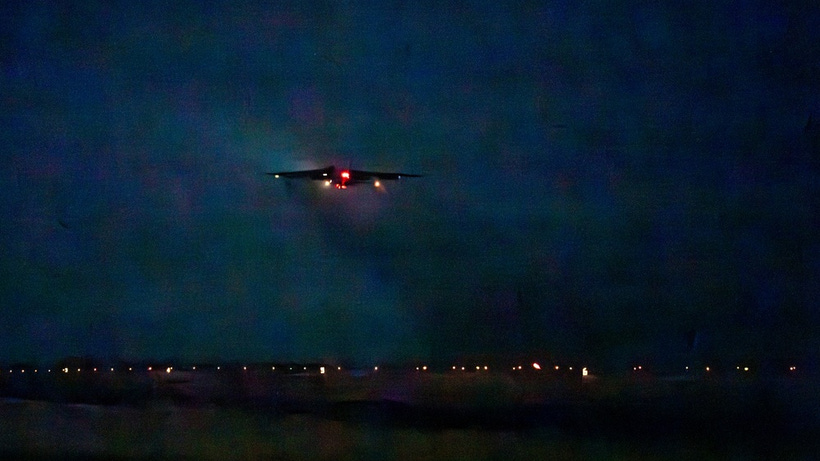
A U.S. Air Force B-52H Stratofortress bomber taxis for takeoff in support of Operation Epic Fury, March 2, 2026. (U.S. Air Force / CENTCOM Public Affairs)
CENTCOM Reports 10,000 Targets Struck, Naval Fleet 92 Percent Destroyed
Admiral Cooper declared on March 25 that “we hit the 10,000th Iranian target just hours ago,” adding that “if you combine what we’ve accomplished with the success of our Israeli ally, together we have struck thousands more.”
The 10,000 figure represents a near doubling from the 5,500 targets reported on March 11, a progression of approximately 320 targets per day.
Cooper reported that 92 percent of Iran’s largest naval vessels have been destroyed. “They’re not sailing, and my operational assessment is that they’ve now lost the ability to meaningfully project naval power,” Cooper assessed.
He added that over two-thirds of Iran’s missile, drone, and naval production facilities have been damaged or destroyed, and that drone and missile launch rates have dropped more than 90 percent from their peak, according to CENTCOM operational data.
The CENTCOM commander noted that B-52 bombers are executing strikes carrying up to 70,000 pounds (approximately 31,750 kilograms) of munitions per mission, with more than 10,000 combat flights completed.
Cooper confirmed that more than 50,000 American service members are deployed for Operation Epic Fury and added: “We’re not done yet. We are on a path to completely eliminate Iran’s wider military manufacturing apparatus.”
In a separate development on March 26, Israel confirmed it killed IRGC Navy commander Alireza Tangsiri in an airstrike on Bandar Abbas. Israeli Defense Minister Israel Katz stated Tangsiri was “directly responsible” for mining and blocking the Strait of Hormuz. The strike also killed IRGC Navy intelligence head Behnam Rezaei, according to IDF confirmation.
Assessment: The March 25 figures represent a shift from the March 11 snapshot. The 92 percent naval destruction figure, if accurate, means Iran has lost its conventional naval deterrent in the Persian Gulf. The 90 percent reduction in launch rates indicates that Iranian missile and drone production is being degraded faster than Tehran can replenish.
The killing of Tangsiri removes the operational commander most directly associated with Iran’s Hormuz blockade strategy, compounding the 92 percent naval vessel losses reported by CENTCOM.
Cooper’s reported 50,000+ service members deployed to the region represents the largest U.S. force concentration in the Middle East during the current operation, according to CENTCOM figures.
An EA-18G Growler launches from USS Abraham Lincoln (CVN 72) in support of Operation Epic Fury, March 6, 2026. (U.S. Navy / CENTCOM Public Affairs)
