

TOKYO — On August 20, following North Korea’s ballistic missile launch, Deputy Director-General Ariyoshi of Japan’s Ministry of Foreign Affairs held a trilateral phone meeting with Baek Yong-jin, Director-General for Korean Peninsula Policy at South Korea’s Foreign Ministry, and David Wilezol, Deputy Assistant Secretary at the U.S. Department of State.


Eleven Nations Issue Joint Alert on North Korean IT Worker Revenue Schemes Funding Weapons Programs
The Republic of Korea Ministry of Foreign Affairs placed the call on Friday, August 21. The three officials shared relevant information and discussed future responses.
The foreign ministries of the three countries operate a channel for promptly sharing information and assessments whenever North Korea launches ballistic missiles.
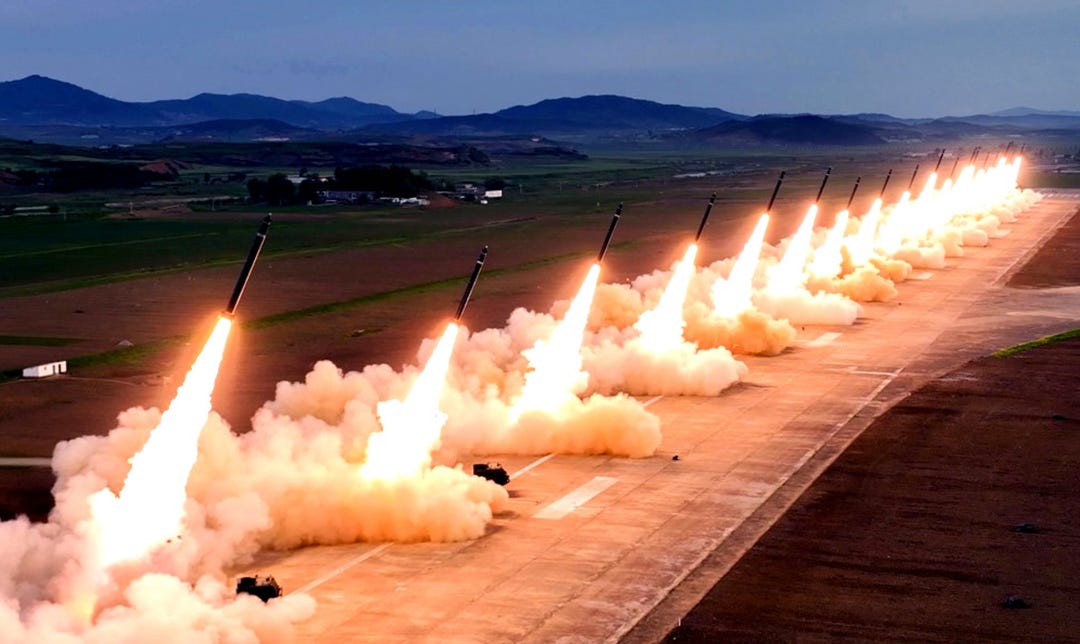
South Korea’s Joint Chiefs of Staff detected more than 10 short-range ballistic missiles launched from the Pyongyang area at around 5:00 p.m. local time (8:00 a.m. UTC) on August 20.
The missiles flew approximately 186 miles (300 km) toward eastern waters. Japan’s Defense Ministry reported multiple ballistic missiles with an estimated flight distance of about 199 miles (320 km) and a maximum altitude of about 56 miles (90 km), with impact outside Japan’s exclusive economic zone.
U.S. Pacific Command (USPACOM) stated on August 20 that it is aware of the recent missile launches and is consulting closely with allies and partners.
Based on current assessments, these events do not pose an immediate threat to U.S. personnel or territory, or to allies. The United States continues its defense of the U.S. homeland and allies in the region.
South Korea’s presidential national security council convened an emergency meeting and stated that the ballistic missile launch is a grave act that violates U.N. Security Council resolutions, calling on North Korea to immediately halt such actions and ordering the military to maintain full readiness.
South Korean Defense Minister Ahn Gyu-back told lawmakers on August 20 that the short-range ballistic missiles are believed to be 600 mm multiple rocket launchers, a system North Korea has previously described as capable of delivering tactical nuclear warheads and known externally as the KN-25.
South Korean Defense Minister: North Korea Has Between 80 and 120 Nuclear Warheads
Ahn assessed that North Korea possesses between 80 and 120 nuclear warheads, a figure drawn from a local research institution based on estimated plutonium holdings. He noted the numbers appear somewhat different from the figure of 57 cited by President Trump.
The launches occurred as the scaled-back U.S.-Republic of Korea Ulchi Freedom Shield exercises continued. The exercises had originally been scheduled through August 27 and were shortened to end on Friday, August 21, following a U.S. order to substantially reduce them.
The U.S. and South Korean militaries were wrapping up the drills on August 21, six days earlier than initially scheduled. Live drills were scaled down from 14 to seven, which will run through August 28 as originally scheduled.
The remaining seven exercises that were removed from the lineup will be rescheduled through consultations with Washington.
A Joint Chiefs of Staff official stated that the seven drills will proceed as planned and be wrapped up by the 28th, since the duration of each training varies by exercise, and that the adjusted drills will be carried out in a combat-realistic manner.
