

MIDDLE EAST — On 10 August President Donald Trump announced that the United States Navy holds sole control of the Strait of Hormuz, describing the existing blockade as “infallible” and “a steel wall,” and reported that U.S. forces had mine-swept the entire waterway.
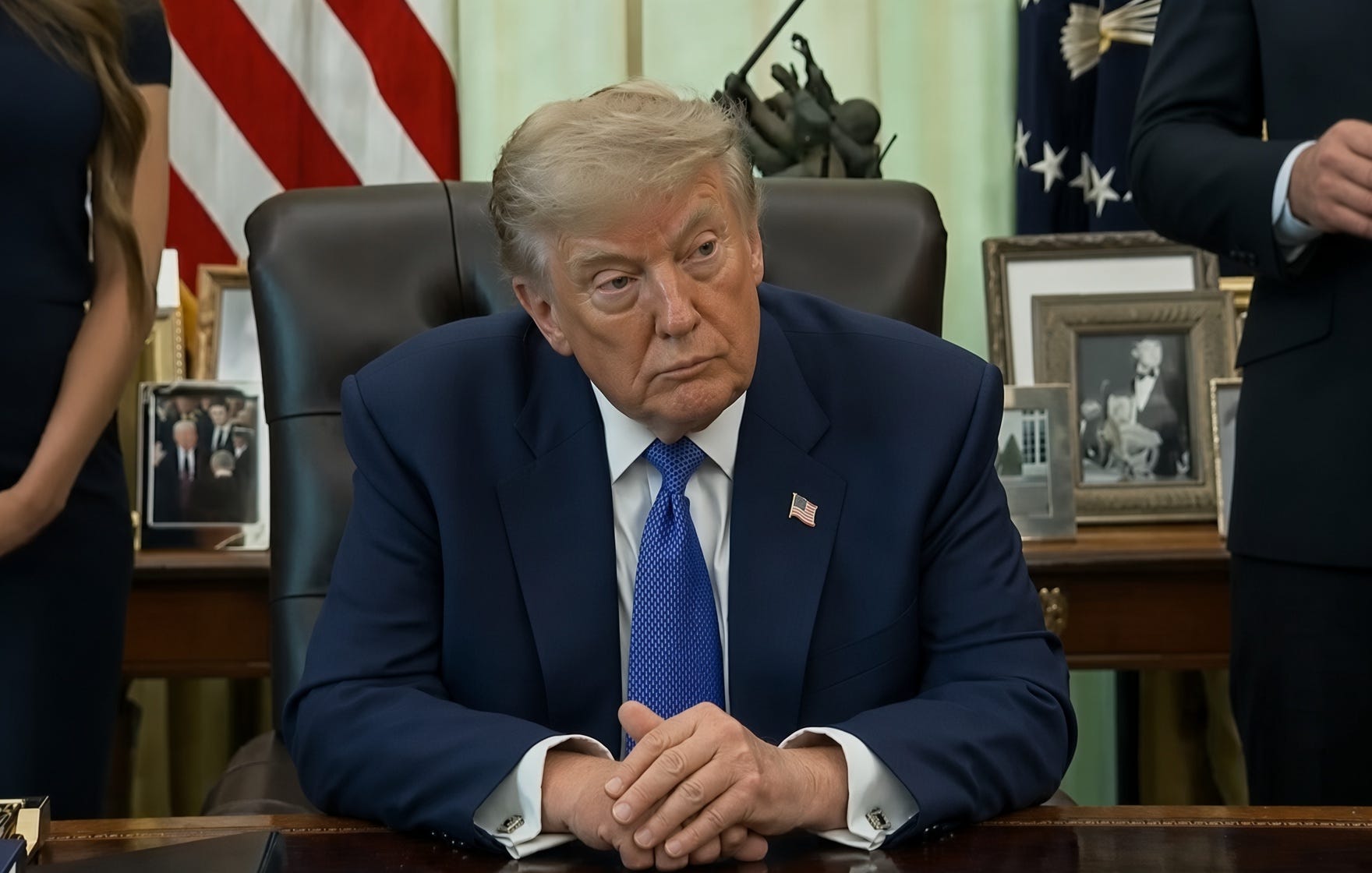


In Oval Office remarks, Trump noted vessels are allowed or denied according to U.S. decision, that traffic is open for non-Iranian destinations, and that Iran is “broke” with inflation exceeding 300 percent. He added that occasional Iranian mine drops are found and removed.
Trump addressed Iranian representatives’ request for compensation for damage from the five-month conflict on the same day, and instructed U.S. negotiators to demand compensation from Iran for individuals killed or wounded in past conflicts, including the USS Cole, and for Iranian protestors he numbered at 52,000 in the recent period plus hundreds of thousands over 50 years.
A follow-up statement extended the demand to damages and deaths in Lebanon, Syria, Yemen, and Gaza.
CENTCOM has issued no public release confirming a full-strait mine sweep as of 10 August. Iranian officials continued to link any reopening of the strait to U.S. acceptance of conditions that include compensation, lifting of the blockade, and related measures.
Iran Says It Controls The Strait And It Won’t Re-open Until US Ceases “Illegal Actions”, Compensates For Damages
Iranian Foreign Ministry spokesman Esmaeil Baghaei reported on 10 August that reopening of the Strait of Hormuz remains contingent on the United States ceasing what he termed illegal actions, lifting the siege, and compensating for damages.
Baghaei noted that talks with Oman on a shipping-route map were progressing, though technical issues on a joint statement remained unresolved, and that maritime services would normally involve payment.
Iranian officials have repeatedly claimed Iranian control over the Strait of Hormuz. Deputy Foreign Minister for Legal and International Affairs Kazem Gharibabadi said in early July that the strait is under Iranian control, not that of CENTCOM.
Iranian leaders, including advisers to the Supreme Leader and Islamic Revolutionary Guard Corps (IRGC)-linked bodies, have described the waterway as subject to Iranian administration, requiring vessels to use Iranian-designated routes, and have rejected parallel or non-Iranian corridors.
The Persian Gulf Strait Authority, established by Iran, has issued statements requiring permits for passage and stating Iranian management of traffic and services.
