

MIDDLE EAST — Two deadlines now bracket the next phase of Operation Epic Fury. President Trump’s self-imposed April 6 pause on Iranian power grid strikes expires in three days.
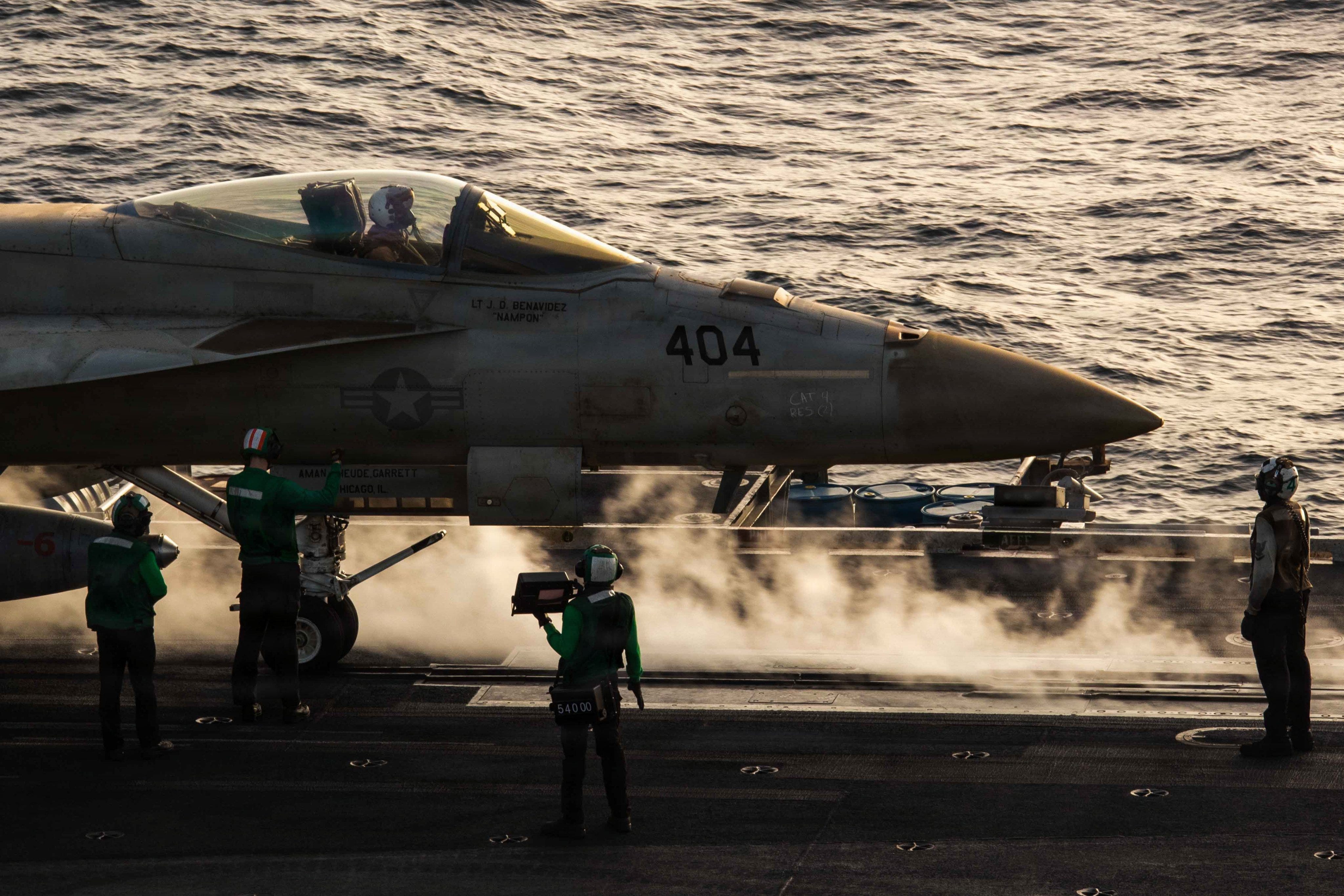


The 60-day War Powers Resolution statutory clock, with no congressional authorization granted, expires around April 28–29, 2026.
On April 2, President Trump stated via Truth Social that Iran’s new leadership had requested a ceasefire. He conditioned any consideration on the full reopening of the Strait of Hormuz to international shipping, adding that until then strikes would continue.
Between those dates the administration has signaled that the campaign will intensify: Trump told the nation on April 1 that strikes will continue “extremely hard over the next two to three weeks” and that every Iranian electric generating plant will be hit “probably simultaneously” if no deal is reached.
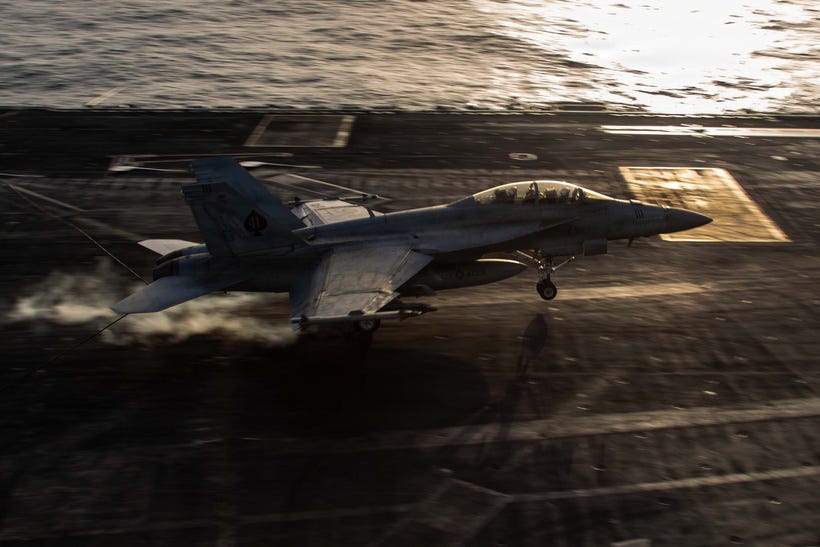
The military picture through week five shows continued degradation of Iranian capabilities. CENTCOM reported that U.S. forces have struck more than 12,300 targets inside Iran as of early April 2026.
Secretary of War Pete Hegseth and Chairman of the Joint Chiefs General Dan Caine reported on March 31 that Iran has suffered significant naval losses with more than 150 vessels damaged or destroyed, that Iranian missile and drone launches have fallen to the lowest level since operations began, and that Iran’s defense industrial base is “nearly completely destroyed.”
Secretary of State Marco Rubio told reporters on March 31 that objectives are achievable in “weeks, not months.” Negotiations through presidential envoys Steve Witkoff and Jared Kushner, Vice President JD Vance, and Secretary Rubio are what Hegseth assessed as “very real” and “gaining strength.”
Iran’s Foreign Ministry responded on April 2 that Trump’s ceasefire characterization is “false and baseless,” with Foreign Minister Araghchi stating via IRNA that Iranian forces are “prepared with their fingers on the trigger” and that “the trust level is at zero.”
Trump’s April 1 Address: Objectives Nearing Completion, Strikes to Continue
Trump told the nation in a prime-time address on April 1 that Operation Epic Fury has achieved its core military objectives.
He said: “Tonight, Iran’s Navy is gone. Their air force is in ruins. Their leaders, most of them, terrorist regime they led, are now dead. Their command and control of the Islamic Revolutionary Guard Corps is being decimated as we speak. Their ability to launch missiles and drones is dramatically curtailed.”
He added: “These core strategic objectives are nearing completion.”
According to the address, 13 U.S. service members killed in the operation gave their lives “to prevent our children from ever having to face a nuclear Iran.”
Trump told reporters he traveled to Dover Air Force Base twice during the conflict. He cited each family’s message: “Please sir, please finish the job.”
Trump stated that “regime change was not our goal” but that it “has occurred because of all of their original leaders’ death,” adding that the new leadership “should be wiser.”
On the strike timeline, he told reporters strikes will continue “extremely hard over the next two to three weeks.”
On the power grid, Trump stated: “If there is no deal, we are going to hit each and every one of their electric generating plants very hard and probably simultaneously.”
He addressed oil infrastructure separately, adding that he has refrained from targeting it to give Iran “even a small chance of survival or rebuilding” but that “we could hit it and it would be gone.”
Trump cited Operation Midnight Hammer, which he said he ordered in June against Iranian nuclear facilities, as the prior operation that preceded Epic Fury after diplomacy failed. He assessed that Iran subsequently sought to rebuild its nuclear program at a different location.
On April 2, Trump posted on Truth Social a video of a bridge destroyed near Tehran, writing that “the biggest bridge in Iran comes tumbling down, never to be used again.” In a separate post, he wrote: “IT IS TIME FOR IRAN TO MAKE A DEAL BEFORE IT IS TOO LATE, AND THERE IS NOTHING LEFT OF WHAT STILL COULD BECOME A GREAT COUNTRY.”
Iran’s Foreign Ministry responded after the address that Trump’s characterization of a ceasefire was “false and baseless.” Foreign Minister Araghchi stated via IRNA on April 2 that Iranian armed forces are “prepared with their fingers on the trigger” and that “the trust level is at zero.”
Assessment: Trump’s public framing of the power grid threat as conditional on a deal, combined with the April 6 pause deadline, gives Tehran a narrowing decision window.
The acknowledgment of the leadership transition in Tehran, paired with characterization of the new government as potentially more reasonable, introduces a negotiating signal directed at Mojtaba Khamenei.
The address functions as both a status report and a compellence signal: continued strikes are presented as the default, a deal as the off-ramp.
