

PERSIAN GULF — The U.S. campaign against Iran over Strait of Hormuz shipping entered a fifth consecutive day on July 15, with U.S. Central Command (CENTCOM) completing a morning strike on Greater Tunb Island and reporting that its renewed naval blockade had turned away its first vessels.
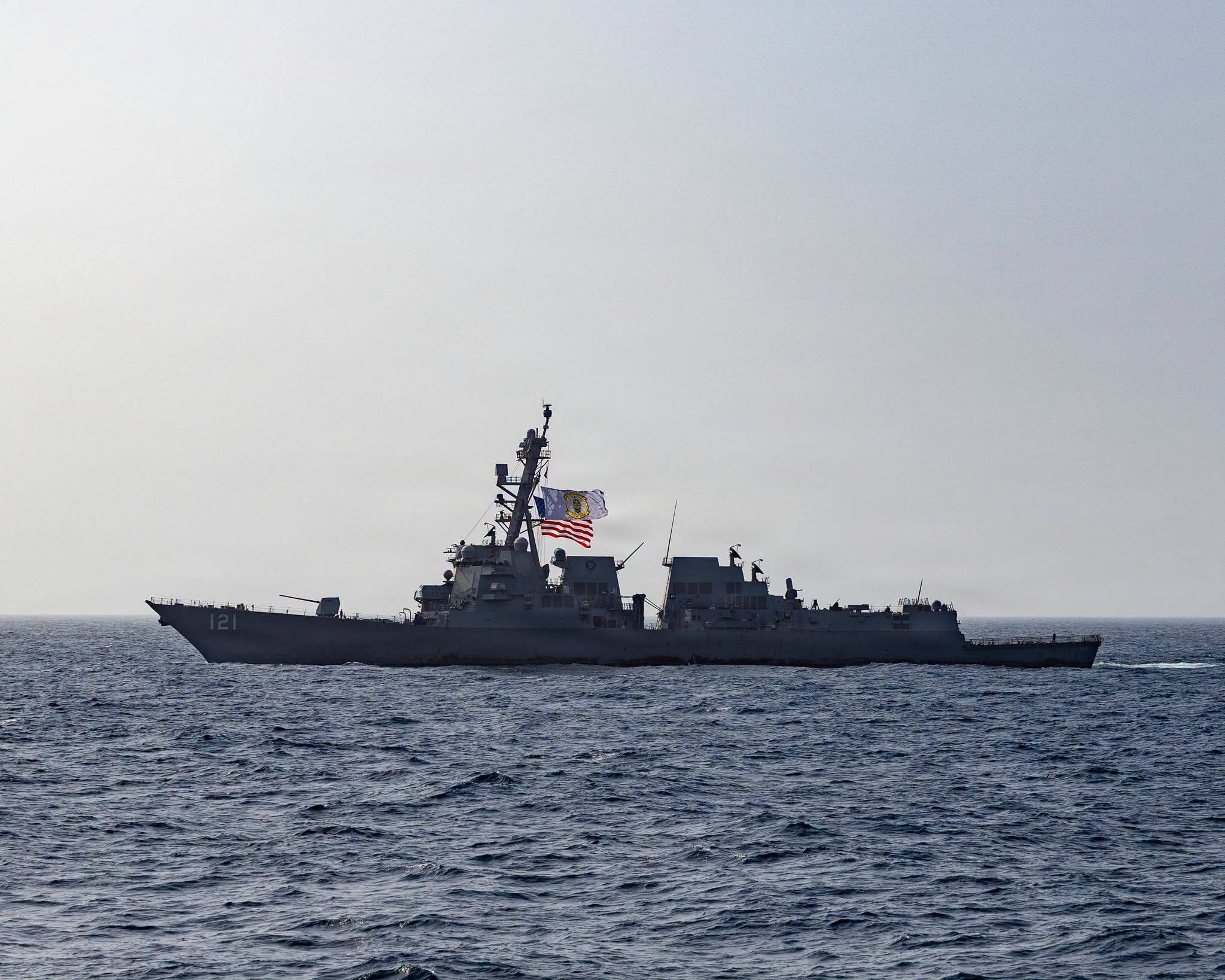


Iran’s Islamic Revolutionary Guard Corps (IRGC) claimed that it carried out a wave of retaliatory strikes on U.S. military facilities in Bahrain, Kuwait, and Jordan.
The command stated that its forces began the July 15 wave at 10:00 a.m. UTC (1:00 p.m. local Gulf time) and completed it at 11:30 a.m. UTC (2:30 p.m. local Gulf time), a 90-minute action against coastal defense systems and cruise-missile storage and launch sites on Greater Tunb Island, a small Iranian-held island near the mouth of the strait.
CENTCOM tied the strikes to degrading Iranian capabilities used against commercial shipping in the Strait of Hormuz.
The morning wave came a day after the July 14 strikes and the restart of the blockade of Iranian ports, when the command carried out an additional strike round at 7:00 p.m. UTC (10:00 p.m. local Gulf time), resumed a naval blockade of Iranian ports at 8:00 p.m. UTC (11:00 p.m. local Gulf time), and completed a seven-hour strike over dozens of targets.
About 17 hours after the blockade restarted, CENTCOM reported redirecting two commercial vessels that attempted to run it, the first count of vessels turned away since the blockade resumed.
The strikes and blockade have run alongside a series of attacks on shipping that each side attributes to the other.
The United Arab Emirates (UAE) Defense Ministry attributed a July 14 cruise-missile strike on two UAE-flagged tankers to Iran, and Iran’s Revolutionary Guard has framed its own operations as retaliation for the U.S. campaign.
