The Standeford Journal - News, Intel Analysis

The Standeford Journal - News, Intel Analysis

Mideast

Iranian Military Claims Warning Shots Fired at Vessels in Strait of Hormuz After Previous Denial of Iranian Strikes on U.S. Warships and Affirms Continued Transit

U.S. Central Command has denied any Iranian firing on American warships and stated that no U.S. vessels were struck.

Donald Standeford's avatar
Donald Standeford
Jun 13, 2026
∙ Paid

STRAIT OF HORMUZ — Iranian military officials claimed on June 12 that forces fired warning shots at vessels attempting to transit the strait without prior coordination.
Share

Pakistani Mediator States Final US-Iran Pace Deal Reached, Iran Says No Final Conclusion

Pakistani Mediator States Final US-Iran Pace Deal Reached, Iran Says No Final Conclusion

Donald Standeford
·
Jun 12
Read full story
President Trump Cancels Scheduled Strikes and Bombings Against Iran After High-Level Discussions, Naval Blockade Remains in Full Force Until Transaction Finalized

President Trump Cancels Scheduled Strikes and Bombings Against Iran After High-Level Discussions, Naval Blockade Remains in Full Force Until Transaction Finalized

Donald Standeford
·
Jun 11
Read full story
U.S. Strikes Iran for Second Day, Air Defenses in Kuwait, Bahrain, and Jordan Engage Iranian Missiles and Drones

U.S. Strikes Iran for Second Day, Air Defenses in Kuwait, Bahrain, and Jordan Engage Iranian Missiles and Drones

Donald Standeford
·
Jun 11
Read full story

More Mideast Reports

U.S. Central Command has denied any Iranian firing on American warships and stated that no U.S. vessels were struck.

Local residents reported hearing explosions, which Iranian sources attributed to the reported activity. No independent confirmation exists of specific targets hit, damage to named vessels, or successful engagement of U.S. forces.

Iranian Military Claims on Warning Shots and Related Actions

The Islamic Revolutionary Guard Corps (IRGC) Navy stated that it had targeted two vessels for illegal attempts to cross the strategic Strait of Hormuz.

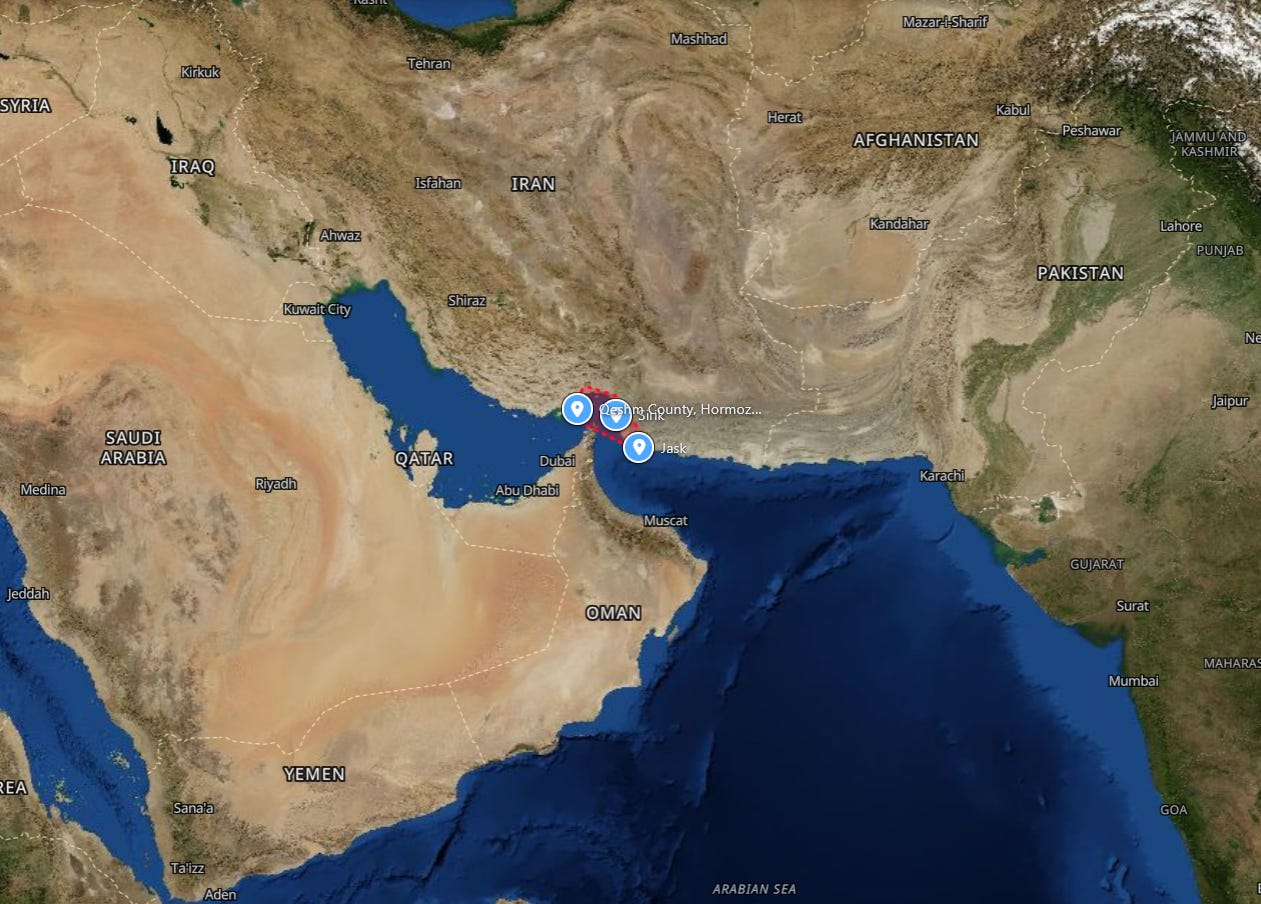
The command announced it fired warning shots at non-compliant or trespassing vessels. Provincial officials in Hormozgan reported explosions near Qeshm, Sirik, and Jask and attributed the sounds to warning fire at ships that did not coordinate passage. They denied any land impacts or casualties in those locations.

Map credits: Donald Standeford (Modified Copernicus Sentinel data), Open Street Map

Refer a friend

The IRGC Navy issued a warning that any vessel approaching the strategic waterway would face decisive action. Khatam al-Anbiya Central Headquarters announced full closure of the strait after a new round of attacks against the country by the U.S. military.

The headquarters stated: “From this moment, due to insecurity in the region, the Strait of Hormuz is declared closed to the passage of all vessels, including oil tankers and commercial ships, and any traffic will be targeted.”

It added that any vessel traffic in the Strait will be dealt with decisively. Major General Abdolrahim Abdollahi, commander of Iran’s Khatam al-Anbiya Central Headquarters, warned that continued threats against Iran’s energy infrastructure could jeopardize oil and gas exports, saying such trade would either remain available to all or to no one.

STRAIT OF HORMUZ — Iranian military officials claimed on June 12 that forces fired warning shots at vessels attempting to transit the strait without prior coordination.

Share

Pakistani Mediator States Final US-Iran Pace Deal Reached, Iran Says No Final Conclusion

Pakistani Mediator States Final US-Iran Pace Deal Reached, Iran Says No Final Conclusion

Donald Standeford
·
Jun 12
Read full story
President Trump Cancels Scheduled Strikes and Bombings Against Iran After High-Level Discussions, Naval Blockade Remains in Full Force Until Transaction Finalized

President Trump Cancels Scheduled Strikes and Bombings Against Iran After High-Level Discussions, Naval Blockade Remains in Full Force Until Transaction Finalized

Donald Standeford
·
Jun 11
Read full story
U.S. Strikes Iran for Second Day, Air Defenses in Kuwait, Bahrain, and Jordan Engage Iranian Missiles and Drones

U.S. Strikes Iran for Second Day, Air Defenses in Kuwait, Bahrain, and Jordan Engage Iranian Missiles and Drones

Donald Standeford
·
Jun 11
Read full story

More Mideast Reports

U.S. Central Command has denied any Iranian firing on American warships and stated that no U.S. vessels were struck.

Local residents reported hearing explosions, which Iranian sources attributed to the reported activity. No independent confirmation exists of specific targets hit, damage to named vessels, or successful engagement of U.S. forces.

Iranian Military Claims on Warning Shots and Related Actions

The Islamic Revolutionary Guard Corps (IRGC) Navy stated that it had targeted two vessels for illegal attempts to cross the strategic Strait of Hormuz.

The command announced it fired warning shots at non-compliant or trespassing vessels. Provincial officials in Hormozgan reported explosions near Qeshm, Sirik, and Jask and attributed the sounds to warning fire at ships that did not coordinate passage. They denied any land impacts or casualties in those locations.
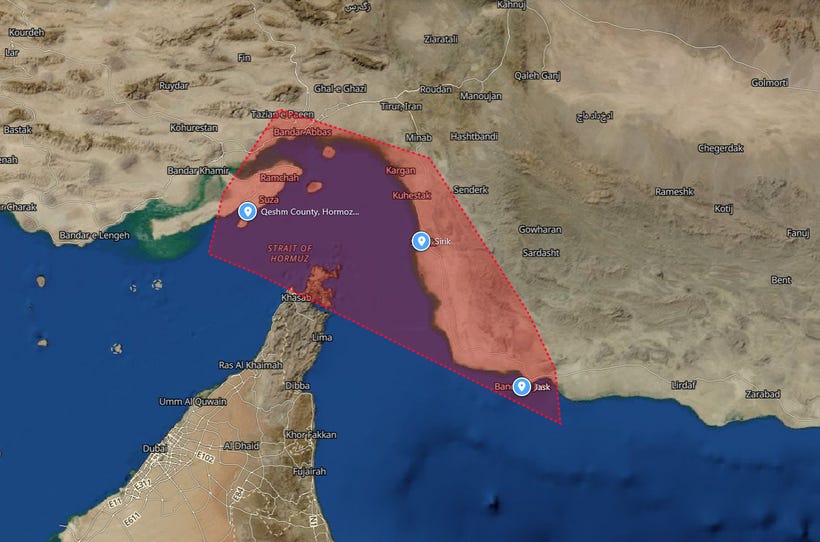
Map credits: Donald Standeford (Modified Copernicus Sentinel data), Open Street Map

Refer a friend

The IRGC Navy issued a warning that any vessel approaching the strategic waterway would face decisive action. Khatam al-Anbiya Central Headquarters announced full closure of the strait after a new round of attacks against the country by the U.S. military.

The headquarters stated: “From this moment, due to insecurity in the region, the Strait of Hormuz is declared closed to the passage of all vessels, including oil tankers and commercial ships, and any traffic will be targeted.”

It added that any vessel traffic in the Strait will be dealt with decisively. Major General Abdolrahim Abdollahi, commander of Iran’s Khatam al-Anbiya Central Headquarters, warned that continued threats against Iran’s energy infrastructure could jeopardize oil and gas exports, saying such trade would either remain available to all or to no one.

These claims follow a pattern of similar Iranian statements since at least May describing warning shots, missile or drone fire toward U.S. destroyers after ignored radio warnings, and vessels turning back.

Assessment: The June 12 warning shots claim by the Islamic Revolutionary Guard Corps Navy occurs against a baseline of prior May-June incidents in which CENTCOM consistently denied attacks on U.S. units and affirmed open transit.

If UKMTO transit data or neutral AIS feeds show sustained low volumes or documented turn-aways beyond 72 hours, the warning shots narrative gains operational weight despite the denial.

The Islamic Revolutionary Guard Corps Navy gains a deterrence narrative in regional messaging, while CENTCOM retains operational freedom of navigation claims by rejecting direct attacks and documenting continued commercial movement.

Specific AIS anomalies or third-party shipping reports confirming vessels turned due to warning shots would serve as a measurable falsification indicator.

U.S. Central Command Denials and Enforcement Actions

U.S. Central Command has issued multiple public denials of Iranian claims involving attacks on U.S. Navy warships.

The command stated: “Iranian media sources are claiming that Iran has attacked a U.S. warship in the Strait of Hormuz. FALSE. TRUTH: No U.S. warships have been struck.”

CENTCOM also rejected Iranian claims of closure: “CLAIM: Iran’s Islamic Revolutionary Guard Corps claims that the Strait of Hormuz is closed. TRUTH: Commercial ships are continuing to transit in and out of the Strait of Hormuz tonight.”

The command has emphasized continued enforcement of restrictions on Iranian-linked shipping, redirection of compliant commercial vessels, and disabling of non-compliant ones.

As of June 12 reports, U.S. forces have redirected 136 to 139 compliant commercial ships and disabled 9 non-compliant vessels since April 13.

On June 11, CENTCOM reported disabling the third oil tanker violating the blockade in the Gulf of Oman. The command affirmed that the Strait of Hormuz remains open for transit while highlighting U.S. naval and air presence.

On June 10, CENTCOM reported: “U.S. Central Command forces began launching additional self-defense strikes today at 5:15 p.m. ET against multiple targets in Iran at the Commander in Chief’s direction. The strikes are in response to Iran’s unwarranted and continued aggression.”

CENTCOM completed its largest training exercise with central and south Asian nations on June 12. More than 350 military personnel from 10 countries and 10 U.S. National Guard units participated in the two-week Regional Cooperation event, which built relationships and fostered trust among partners.

Assessment: As of the morning of June 13, CENTCOM has not issued a new public denial specifically addressing the June 11–12 Iranian claims of warning shots or two vessels targeted.

The June 10 denials and June 11 transit reaffirmation remain the standing U.S. position. U.S. messaging prioritizes explicit denial of direct attacks on its forces, affirmation of continued transit, and documentation of enforcement metrics.

The rejection of closure claims and reporting of ongoing commercial traffic directly counters Iranian announcements of warning shots and decisive action.

UKMTO Documented Incidents in Adjacent Waters

UK Maritime Trade Operations issued warnings for incidents in the broader Gulf of Oman and approaches to the Strait of Hormuz in early June.

UKMTO Warning 065-26 reported an attack on a cargo vessel 88NM southwest of Balhaf, Yemen. The vessel’s captain reported the vessel was approached by one craft with six armed persons onboard.

There was an exchange of fire between the small craft and the cargo vessel’s armed security team, resulting in the small craft turning away. No environmental impact was reported; authorities continued investigating.

Additional UKMTO warnings covered suspicious activity and a tanker experiencing an engine room fire 21NM northeast of Sohar, Oman, on or around June 10-11.

No environmental impact was reported in the fire incident; vessels were advised to transit with caution and report suspicious activity.

These reports align with a sharp reduction in daily transits through the strait due to the cumulative effects of restrictions, prior incidents, and risk perceptions.

Commercial shipping data referenced in reporting indicates traffic has fallen dramatically from pre-war levels. UKMTO has received 54 reports of incidents affecting vessels operating in and around the Arabian Gulf, Strait of Hormuz, and Gulf of Oman.

Assessment: UKMTO warnings detail security incidents affecting commercial vessels in the immediate theater during the same window as the Iranian warning shots claim.

Analysis of Claims, Sources, and Consistency with Other Data

The central Iranian assertion is that the IRGC Navy fired warning shots at vessels transiting without coordination, naming two vessels and issuing a decisive-action warning.

This narrative is disseminated via Iranian military channels and state media and mirrors prior Iranian statements since May describing similar actions after ignored warnings.

Local reports of explosions in Hormozgan province offer partial corroboration for audible effects but do not verify vessel targets, trajectories, or outcomes.

CENTCOM explicitly denies any attacks on U.S. warships and rejects claims of closure. It provides enforcement metrics showing redirected and disabled vessels while stating that commercial transit continues. These statements align with CENTCOM’s responses to earlier Iranian claims in the same theater.

UKMTO documents specific incidents, including an exchange of fire and an engine-room fire, but these reports do not match the Iranian description of warning shots aimed at non‑compliant vessels within the strait. The cargo‑vessel incident southwest of Balhaf occurred in a different location and involved different dynamics.

Source Analysis

Issued after U.S. strikes, Iranian military statements emphasize enforcement and deterrence and present an effort to assert control over the choke point.

CENTCOM emphasizes denial of successful attacks on U.S. forces and maintains a freedom‑of‑navigation narrative, supported by quantitative enforcement data.

UKMTO provides neutral, incident‑specific maritime safety reporting focused on observable effects on commercial traffic without attributing intent or broader closure.

Assessment: The IRGC Navy’s warning‑shots claim is internally consistent with prior Iranian statements but lacks independent corroboration from UKMTO or commercial tracking sources.

CENTCOM’s denial of attacks on U.S. forces and affirmation of open transit directly contradict the Iranian account and closure claims.

UKMTO’s documented incidents indicate elevated maritime risk but do not validate the warning‑shots report.

The IRGC gains narrative initiative by projecting control, while CENTCOM preserves operational credibility by documenting enforcement and denying successful strikes.

Sustained low transit volumes or AIS‑documented turn‑aways explicitly attributed to warning shots would strengthen the Iranian claim, absence of such data after 72 hours would indicate the claim functions more as signaling than confirmed operational effect.

No independent confirmation exists for the reported warning shots or strikes on the two named vessels. The recurrence of similar claims followed by CENTCOM denials is consistent with a coordinated information‑warfare pattern.

What to Watch

  • CENTCOM press releases and official statements for updates on blockade enforcement numbers, any confirmation or further denial of Iranian vessel engagements, and outcomes from the Regional Cooperation exercise.

  • UKMTO warnings and advisories for additional incidents in the Gulf of Oman and Strait of Hormuz approaches, including any reports matching descriptions of warning shots or vessel turn-aways.

  • Official Iranian military channels for details on the two vessels reportedly targeted by the Islamic Revolutionary Guard Corps Navy, implementation of any closure measures, and statements on oil and gas export policy.

  • AIS and commercial shipping data feeds for observable changes in transit volumes or routing through the strait.

Official Statements

  • U.S. Central Command denial of attack claim: “Iranian media sources are claiming that Iran has attacked a U.S. warship in the Strait of Hormuz. FALSE. TRUTH: No U.S. warships have been struck.”

  • U.S. Central Command denial of closure claim: “CLAIM: Iran’s Islamic Revolutionary Guard Corps claims that the Strait of Hormuz is closed. TRUTH: Commercial ships are continuing to transit in and out of the Strait of Hormuz tonight.”

  • U.S. Central Command strikes announcement: “U.S. Central Command forces began launching additional self-defense strikes today at 5:15 p.m. ET against multiple targets in Iran at the Commander in Chief’s direction. The strikes are in response to Iran’s unwarranted and continued aggression.”

  • Khatam al-Anbiya Central Headquarters closure and decisive action statement: “From this moment, due to insecurity in the region, the Strait of Hormuz is declared closed to the passage of all vessels, including oil tankers and commercial ships, and any traffic will be targeted.” “Any vessel traffic in the Strait will be dealt with decisively.”

Intelligence Gaps

  • Independent confirmation through commercial AIS anomalies, neutral maritime reporting, or third-party imagery of the precise targets, outcomes, or any hits claimed by the Islamic Revolutionary Guard Corps Navy on June 12, including the two vessels that were claimed to have been targeted and any enforcement of the announced complete closure.

  • Specific identities, flags, or IMO numbers of vessels allegedly warned, turned back, or hit by warning shots.

  • Verification of whether reported explosions resulted from warning shots, live-fire exercises, or other military activity, and any correlation to the UKMTO-documented exchange of fire southwest of Balhaf.

  • Public statements from Oman or UAE authorities on incidents near their waters, including the engine room fire near Sohar.

  • Details on implementation or effects of any Iranian-announced total closure of the strait and any response to the decisive action warning.

  • Updates on the June 12 Regional Cooperation exercise outcomes or any related maritime security implications.

Fact-Check Summary

  • Claim: The Islamic Revolutionary Guard Corps Navy fired warning shots at non-compliant or trespassing vessels in the Strait of Hormuz on or around June 12, with explosions heard in Qeshm, Sirik, and Jask. Status: Disputed. Iranian military statements and local reports support the occurrence of explosions attributed to this activity. No independent verification of specific vessel targets, shot trajectories, or effects on transiting ships from UKMTO or commercial sources.

  • Claim: The Islamic Revolutionary Guard Corps Navy targeted and hit two vessels for illegal attempts to cross the Strait of Hormuz. Status: Iranian claim; unverified independently. Iranian military statements reported the action; no corroborating reports from UKMTO, commercial sources, or other primary maritime authorities.

  • Claim: Khatam al-Anbiya Central Headquarters announced complete and immediate closure of the Strait of Hormuz, with any traffic to be targeted decisively. Status: Disputed. Iranian military statements reported the announcement. CENTCOM explicitly stated commercial ships continue to transit and rejected closure claims.

  • Claim: Warning shots or actions targeted or affected U.S. Navy destroyers/warships. Status: Disputed. Multiple CENTCOM statements explicitly deny any firing on or strikes against U.S. warships. No corroborating evidence from U.S., allied, or commercial sources.

  • Claim: The Strait of Hormuz remains open and transit continues under restrictions. Status: Verified by CENTCOM. CENTCOM statements affirm openness for compliant traffic and ongoing commercial transits; UKMTO warnings document specific incidents but do not indicate full closure.

  • Claim: UKMTO Warning 065-26 documented an attack on a cargo vessel 88NM southwest of Balhaf, Yemen, with exchange of fire involving a small craft with six armed persons. Status: Verified. UKMTO primary warning report; small craft turned away after exchange; no environmental impact reported.

  • Claim: CENTCOM disabled a third oil tanker violating the blockade in the Gulf of Oman on or around June 11. Status: Verified. CENTCOM press release.

  • Claim: CENTCOM completed its largest training exercise with central and south Asian nations on June 12, involving more than 350 personnel from 10 countries and 10 U.S. National Guard units. Status: Verified. CENTCOM press release and website.

  • Claim: No land impacts or casualties from the reported June 12 activity in Iranian coastal areas. Status: Verified by Iranian provincial sources; no contradicting reports of civilian harm.

  • Claim: Oil and gas exports will be for everyone or no one. Status: Iranian commander statement; reflects stated Iranian position on energy infrastructure threats.

Source Note

This report draws from official U.S. Central Command statements and press releases, UKMTO warnings, and Iranian military statements carried through state media outlets on enforcement actions, closure announcements, and related statements in the Strait of Hormuz region during June 10-12.

© 2026 Donald Standeford · Privacy ∙ Terms ∙ Collection notice
Start your SubstackGet the app
Substack is the home for great culture