

MIDDLE EAST — A two-week ceasefire between the United States and Iran, announced April 8 following Pakistani mediation, fractured within hours as Israel hit more than 100 targets across Lebanon, killing at least 254 people, and Iran launched missiles and drones at the United Arab Emirates (UAE), Kuwait, Saudi Arabia, Qatar, and Bahrain.
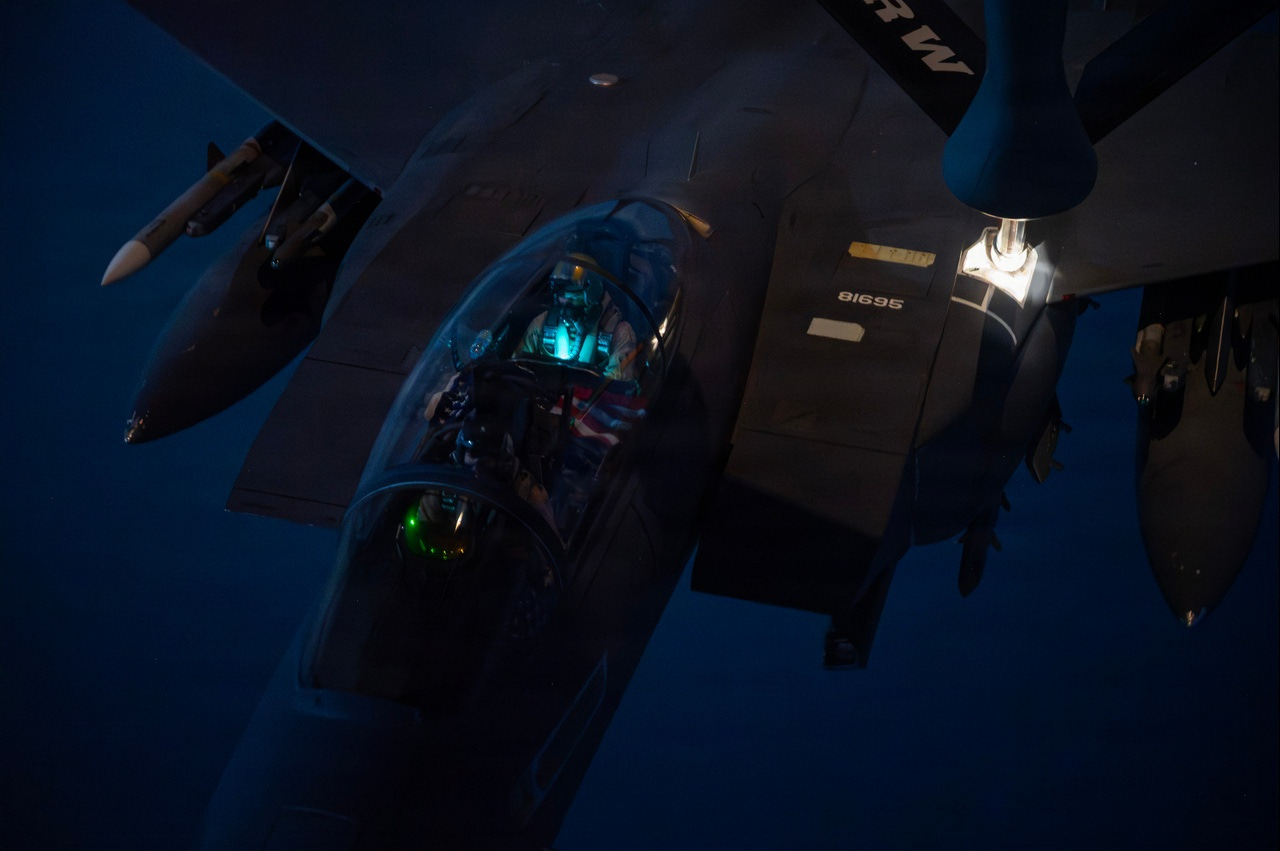

Trump Sets 8 PM Deadline for Iran as Tehran Submits 10-Clause War Termination Proposal via Pakistan


Iran halted tanker traffic through the Strait of Hormuz after the Israeli strikes on Lebanon, then allowed two vessels through before closing transit again.
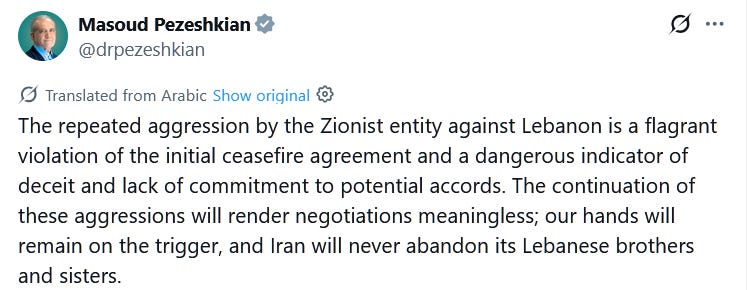
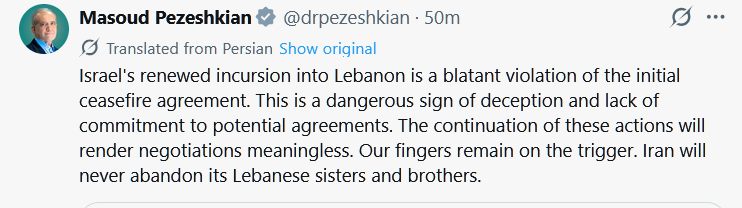
Iran’s Foreign Minister Abbas Araghchi formally accepted the ceasefire but conditioned Strait of Hormuz passage on “coordination with Iran’s Armed Forces.” President Trump said the ceasefire required the “COMPLETE, IMMEDIATE, and SAFE OPENING” of the strait.
According to White House Press Secretary Karoline Leavitt, the strait must reopen “without any limitations, whether in the form of tolls or otherwise.”
Iran’s Parliament Speaker Mohammad Bagher Ghalibaf said the United States violated three clauses of the ceasefire framework. Vice President JD Vance, who will lead the U.S. delegation at Islamabad talks on April 10, addressed the claims and said they were unfounded.
The U.S. Department of War reported American and Israeli forces struck more than 13,000 targets over 38 days of Operation Epic Fury.
Israel Hits More Than 100 Lebanon Targets, Killing 254
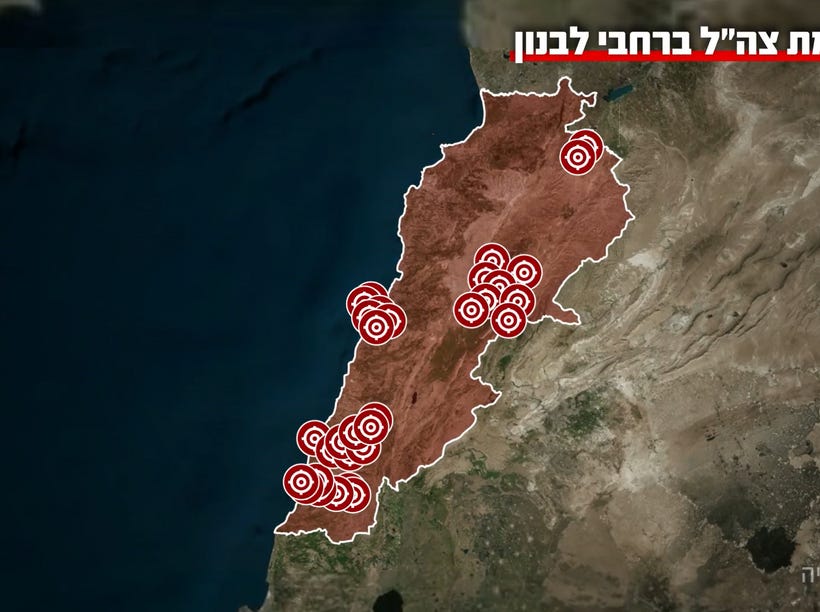
Israel launched its largest coordinated attack on Lebanon since the war began on April 8, hitting more than 100 sites across the country. Lebanon’s civil defense department reported at least 254 people killed and more than 1,100 wounded.
The Israel Defense Forces (IDF) deployed approximately 50 fighter jets and 160 munitions, according to Lebanese government reporting.
Strikes hit central Beirut without prior warning, including at least five neighborhoods during rush-hour traffic. Lebanon’s Ministry of Health reported the attacks were “unprecedented in number and intensity.”
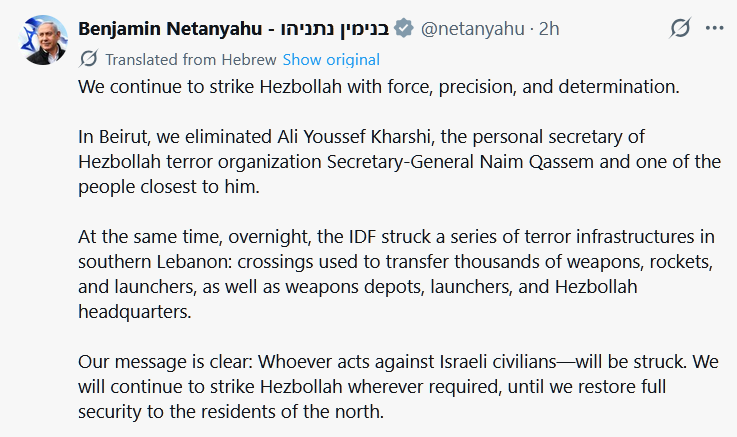
Israeli Prime Minister Benjamin Netanyahu said in a televised address that Lebanon was not part of the ceasefire with Iran and that Israel would “continue to operate” against Hezbollah. According to Pakistani Prime Minister Shehbaz Sharif, the ceasefire mediator, the agreement included Lebanon.
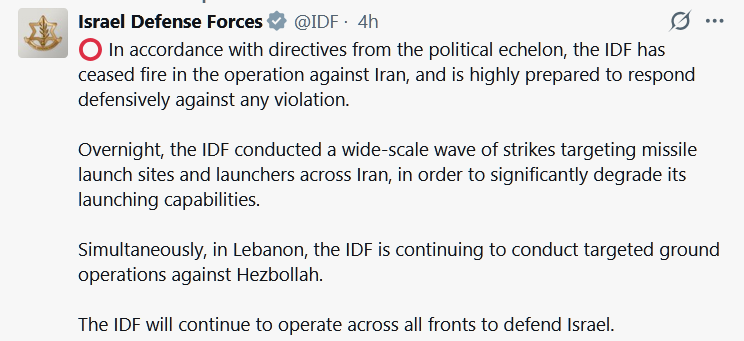
The IDF stated, “In accordance with directives from the political echelon, the IDF has ceased fire in the operation against Iran, and is highly prepared to respond defensively against any violation.
Overnight, the IDF conducted a wide-scale wave of strikes targeting missile launch sites and launchers across Iran, in order to significantly degrade its launching capabilities.”
The statement added, “Simultaneously, in Lebanon, the IDF is continuing to conduct targeted ground operations against Hezbollah. The IDF will continue to operate across all fronts to defend Israel.”
The IRGC said, “We issue a firm warning to the United States, which violates treaties, and to its Zionist ally, its executioner: if the aggression against beloved Lebanon does not cease immediately, we will fulfill our duty and deliver a response.”
Hezbollah reported firing rockets at the kibbutz of Manara in northern Israel early April 9, its first attack since the ceasefire was announced, citing Israeli violations.
Assessment: Netanyahu’s statement that Lebanon is not part of the ceasefire directly contradicts Sharif’s statement that it is. The Western joint statement (10 nations plus Japan) called for ceasefire implementation “including in Lebanon.”
French President Emmanuel Macron spoke with both Iranian President Massoud Pezeshkian and Trump, then said the ceasefire must be “fully respected by each of the belligerents, across all areas of confrontation, including in Lebanon.” Ghalibaf cited the Lebanon strikes as one of three U.S. ceasefire violations.
The IRGC’s threat to “deliver a response” if Israeli strikes on Lebanon continue introduces a direct Iranian military dimension to the Lebanon front, separate from Hezbollah’s retaliatory rockets at Manara. Iran’s Hormuz re-closure was also linked to the Lebanon strikes, connecting the two fronts operationally.
Iran Halts Hormuz Tanker Traffic After Lebanon Strikes
The Islamic Revolutionary Guard Corps (IRGC) halted all ship traffic through the Strait of Hormuz after Israel’s strikes on Lebanon on April 8.
Two bulk carriers, the Greek-owned NJ Earth and the Liberian-flagged Daytona Beach, transited the strait earlier in the day after obtaining permission from Iran. Further passage was then stopped.
Marine Traffic data showed approximately 800 tankers waiting on both sides of the strait, including 426 tankers, 34 Liquefied Petroleum Gas (LPG) carriers, and 19 Liquefied Natural Gas (LNG) ships.
Leavitt stated, “The immediate priority of the president is the reopening of the strait without any limitations, whether in the form of tolls or otherwise.”
Iran’s published 10-point plan includes a $2 million per-ship transit fee and passage “in coordination with Iran’s armed forces.” No U.S. statement has addressed either provision.
In a separate post, Trump said, “All U.S. Ships, Aircraft, and Military Personnel, with additional Ammunition, Weaponry, and anything else that is appropriate and necessary for the lethal prosecution and destruction of an already substantially degraded Enemy, will remain in place in, and around, Iran, until such time as the REAL AGREEMENT reached is fully complied with.”
Trump added, “If for any reason it is not, which is highly unlikely, then the ’Shootin’ Starts,’ bigger, and better, and stronger than anyone has ever seen before.” According to the same post, “NO NUCLEAR WEAPONS and, the Strait of Hormuz WILL BE OPEN & SAFE.”
Assessment: Two ships transited successfully before the IRGC re-closed the strait, indicating Iran has operational control over passage. The re-closure came in direct response to the Lebanon strikes, linking Hormuz access to the Lebanon front.
Araghchi’s acceptance language (“safe passage… via coordination with Iran’s Armed Forces”) contradicts Trump’s “COMPLETE, IMMEDIATE, and SAFE OPENING” and Leavitt’s “without any limitations.”
Trump’s “REAL AGREEMENT” post and the threat that the “Shootin’ Starts” if terms are not met indicates the U.S. has not withdrawn military assets from the region despite the ceasefire. The 800 vessels waiting on both sides represent a measurable baseline for tracking compliance.
Gulf States Report Post-Ceasefire Iranian Attacks
Iran launched missiles and drones at targets across the UAE, Kuwait, Saudi Arabia, Qatar, and Bahrain on April 8, hours after the ceasefire took effect. Iran stated the launches were in retaliation for a strike on the Lavan Island oil refinery.
The UAE Ministry of Defense stated, “The blatant Iranian attacks since the ceasefire took effect have reached 17 ballistic missiles and 35 drones, and the air defenses have successfully dealt with them.”
According to a detailed follow-up, “UAE air defenses have engaged a total of 537 ballistic missiles, 26 cruise missiles, and 2,256 UAV’s” since the onset of Iranian attacks.
The April 8 attacks “resulted in injuries to 3 individuals, all of whom sustained minor injuries, bringing the total number of injuries to 224, involving individuals of various nationalities.”
The statement read: “no martyrs or fatalities have been reported in the past hours.” Since the onset of attacks, “the total number of martyrs has reached 2, in addition to the martyrdom of a Moroccan civilian contracted with the Armed Forces.
The total number of civilian fatalities stands at 10, from Pakistani, Nepalese, Bangladeshi, Palestinian, Indian, and Egyptian nationalities.”
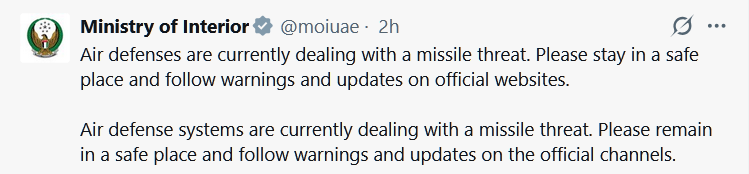
The UAE Ministry of Interior said, “Air defense systems are currently dealing with a missile threat. Please remain in a safe place and follow warnings and updates on the official channels.”
Kuwait’s Defense Ministry reported its air defenses intercepted 28 Iranian drones launched since 8 a.m. local time. The statement cited “intense hostile Iranian attacks.” Kuwait’s Interior Ministry said “severe material damage” occurred at Kuwait Petroleum Corporation facilities and energy and water ministry installations in the south of the country.
Saudi Arabia’s Ministry of Defense reported nine drones were intercepted and destroyed in the hours following the ceasefire. A Saudi pipeline was directly hit by a separate drone. A fire started at Abu Dhabi’s Habshan gas complex.
Qatar’s Ministry of Defense reported seven ballistic missiles and a number of drones targeted the country on April 8, all of which were intercepted. Bahrain also reported interceptions.
Assessment: UAE interception of all 52 April 8 projectiles (17 ballistic missiles, 35 drones) maintains near-total engagement success across 2,819 cumulative Iranian projectiles (537 ballistic, 26 cruise, 2,256 unmanned aerial vehicles).
Kuwait cited “severe material damage” at oil facilities, the first such infrastructure damage to Kuwait since the Mina Al-Ahmadi strikes of March 19.
Iran’s stated justification (retaliation for Lavan refinery) creates a claim-counterclaim cycle: the IDF denied hitting Lavan, and no party has attributed the refinery attack.
Lavan Refinery Attacked After Ceasefire, Attribution Disputed
Iran’s National Iranian Oil Refining and Distribution Company reported that the Lavan Island oil refinery was attacked at approximately 10 a.m. local time on April 8, after the ceasefire took effect.
The company called it “a cowardly attack by enemies.” No casualties were reported; employees had been evacuated. No party has taken responsibility for the Lavan refinery strike. The IDF released a statement denying involvement. Iran’s subsequent launches against Gulf states were framed as retaliation for the refinery attack.
Assessment: The Lavan refinery strike occurred after both the U.S. and Israel stated they had ceased fire against Iran, and the IDF denied involvement. No attribution has been established.
Iran used the attack as stated justification for launching 17 ballistic missiles and 35 drones at the UAE and 28 drones at Kuwait. Whether Iranian military commanders received or acted on ceasefire orders before these launches has not been addressed by any party.
