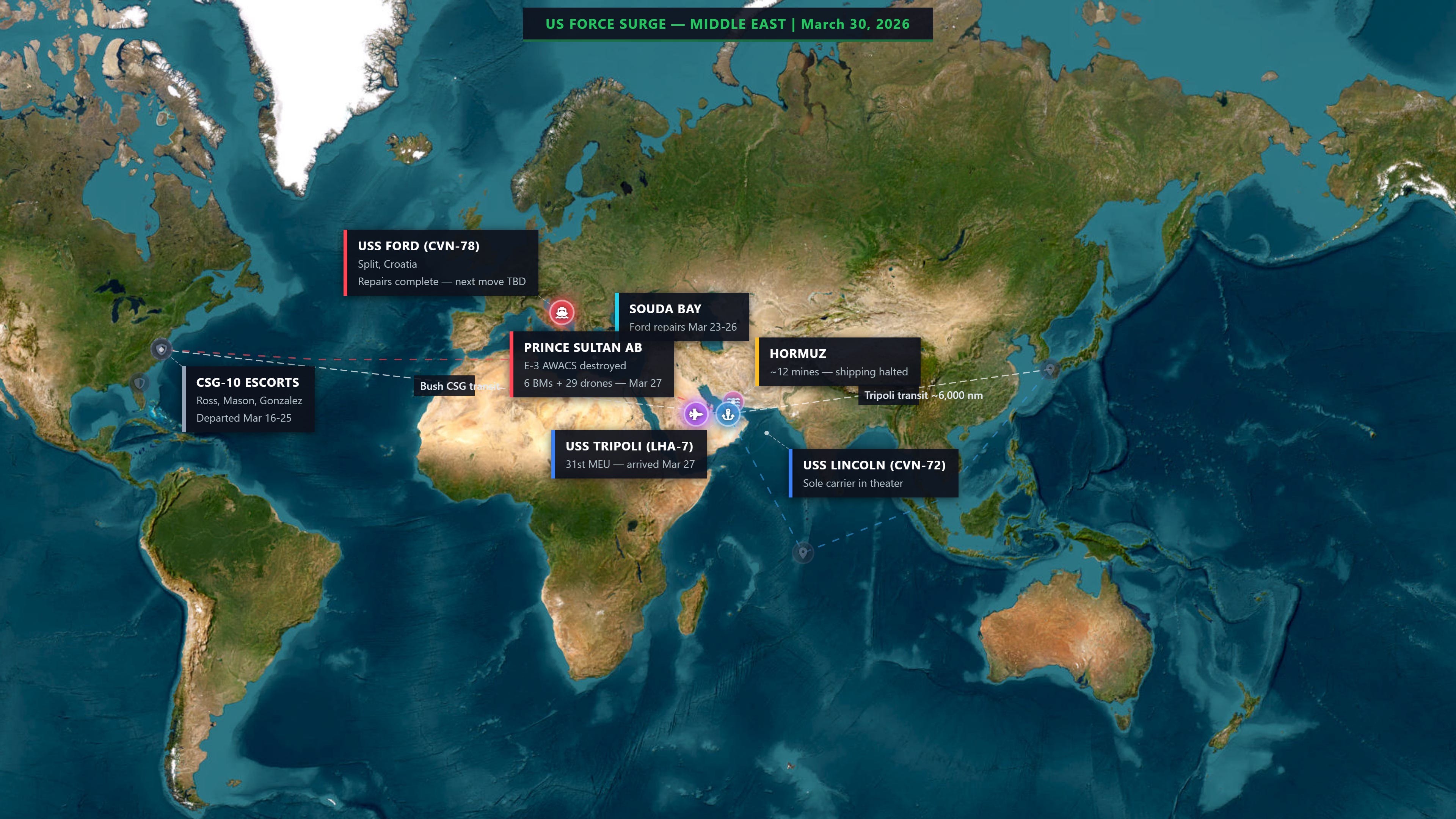
MIDDLE EAST — U.S. Central Command (CENTCOM) confirmed that USS Tripoli (LHA-7) and approximately 3,500 sailors and Marines arrived in the CENTCOM area of responsibility on March 27.
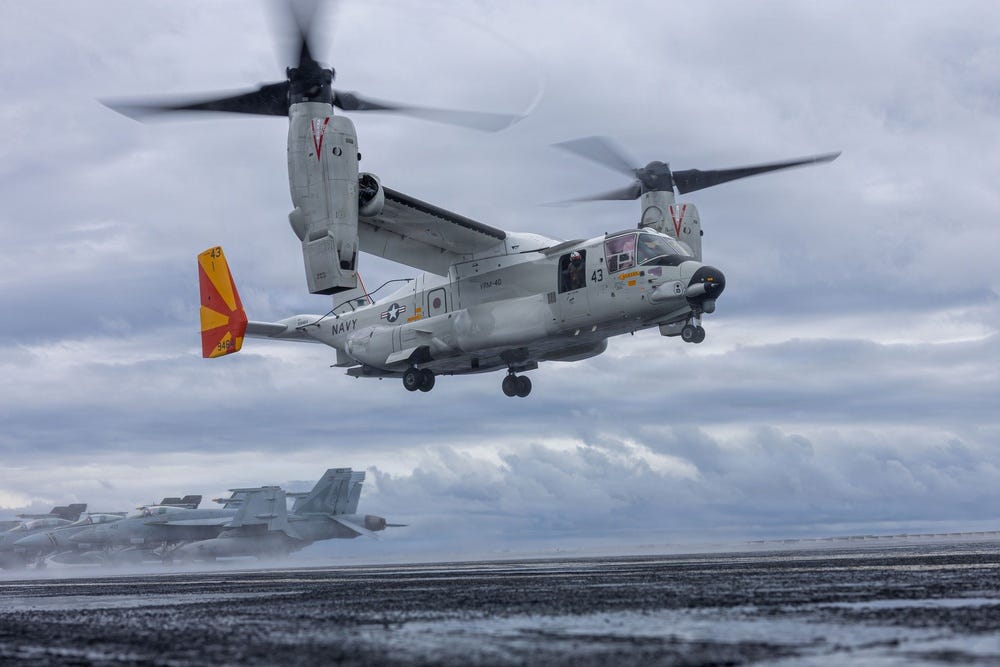


The amphibious assault ship brings F-35B strike fighters, tiltrotor aircraft, and ground combat Marines into the theater.
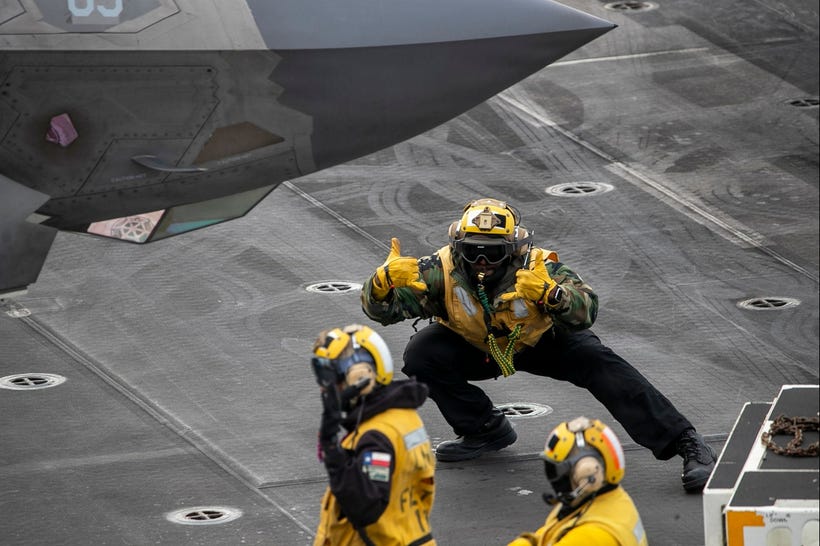
The arrival coincided with the departure of three guided-missile destroyers from the George H.W. Bush Carrier Strike Group (CSG) 10 from East Coast ports, positioning a second carrier strike group to enter the theater within days.
CENTCOM Commander Admiral Brad Cooper reported on March 25 that coalition forces had struck more than 10,000 Iranian targets and damaged or destroyed over two-thirds of Iran’s missile, drone, and naval production facilities since Operation Epic Fury began on February 28.
USS Abraham Lincoln (CVN-72) has operated as the sole carrier in the CENTCOM area since USS Gerald R. Ford (CVN-78) diverted to Greece for emergency repairs after an onboard fire on March 12.
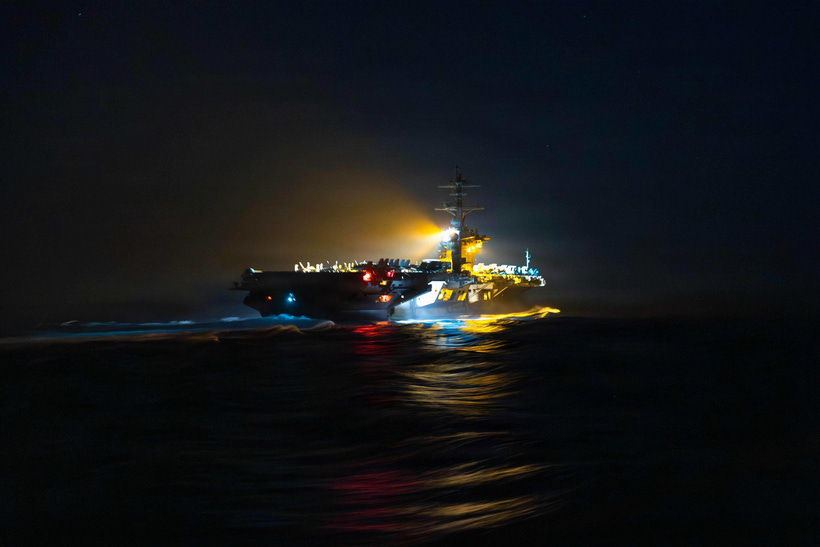
The Ford completed repairs at Souda Bay, Crete, between March 23 and 26 and arrived in Split, Croatia, on March 28, according to the U.S. Sixth Fleet.
A second amphibious ready group led by USS Boxer (LHD-4) with the 11th Marine Expeditionary Unit (MEU) and approximately 2,500 Marines departed San Diego three weeks ahead of schedule on March 20 and was transiting the Pacific as of March 23, according to the U.S. Naval Institute fleet tracker.