

SOUTHERN BORDER — On August 27 U.S. Southern Command reported that Joint Task Force-Southern Border personnel used the Army Multipurpose High Energy Laser (AMP-HEL) during the late-night hours of August 25 and 26 against three unmanned aircraft the command called hostile and cartel-linked.


The weapon is a directed-energy system. It burns or disables a target with a focused beam rather than a missile.
The aircraft were judged hostile, the command said, because they were used in direct support of activity posing a physical threat to U.S. military personnel and U.S. Customs and Border Protection partners.
The same release called those nights the first use of AMP-HEL to defeat drones the command called cartel-linked.
A statement released by NORTHCOM on August 28, stated, “Three cartel drones defeated.”
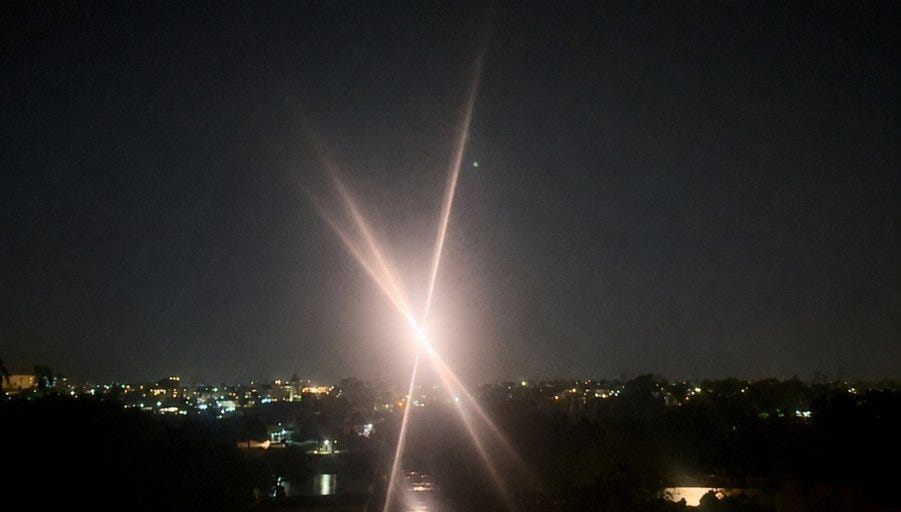
The task force pointed readers to a Defense Visual Information Distribution Service release and to a night photograph dated August 25 at Fort Bliss, Texas.
Neither command published the engagement coordinates, nor said whether the shots were taken in U.S. or Mexican airspace.
Mexico Released No Statement On The Engagement
Mexico’s Secretariat of Foreign Affairs, Secretariat of National Defense, and the Office of the President had issued no statement on this engagement as of August 29.
Customs and Border Protection had published no release of its own on the three aircraft.
The Federal Aviation Administration and the Department of War stated on April 10 that they had completed a safety assessment of a high-energy laser counter-drone system for southern-border use.
They said the system did not present an increased risk to passenger aircraft. Joint Interagency Task Force 401, the Pentagon office that fields homeland counter-drone gear in support of the border task force, named Fort Bliss and Fort Huachuca, Arizona, on May 6 as southern-border sites in a directed-energy pilot written into the defense authorization act for that fiscal year.
