

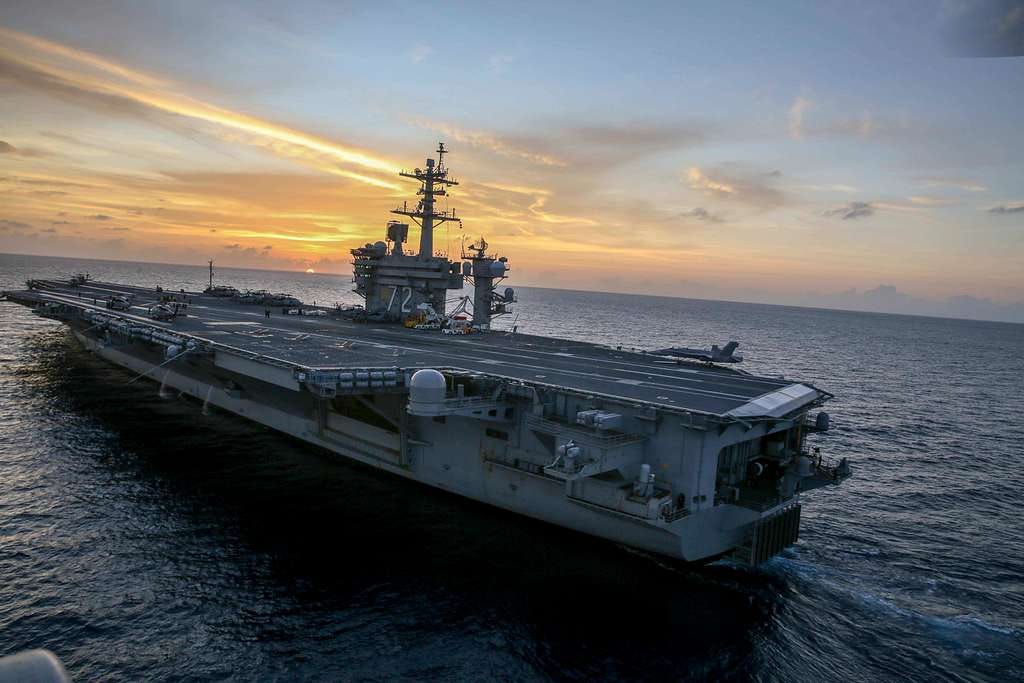
MIDDLE EAST — The United States positioned the USS Abraham Lincoln carrier strike group in the Middle East on January 17, in response to Iran’s suppression of nationwide protests and riots that erupted on January 8, resulting in estimates ranging from 3,117 according to state media to over 36,500 according to activist groups.


U.S. President Donald J. Trump announced on January 13 that aid was forthcoming for protesters. Iranian authorities imposed a near-total internet blackout and suspended visual flight rule operations nationwide from January 26, signaling heightened security measures.
The U.S. Department of State sanctioned entities facilitating Iran’s petroleum trade on January 15, aiming to pressure the Iranian government. Congressional assessments on January 14 highlighted risks of military escalation, while Iranian state media warned of retaliatory strikes on U.S. assets.
The USS Abraham Lincoln, accompanied by its strike group including destroyers and nearly 90 aircraft, redirected from the South China Sea to the Middle East.
This move followed Iranian threats broadcast on state television to target U.S. carriers entering territorial waters. The U.S. Department of War stated on January 5 that the positioning enhances force protection amid regional instability.
Protests and riots in Iran, triggered by economic grievances, faced a severe crackdown on January 8-9, with security forces deploying live ammunition and militarized units.
Opposition reports documented mass arrests and extrajudicial killings, while the government imposed communication restrictions to conceal the scale of violence. Amnesty International noted on January 8 that the response involved heavy weaponry, marking one of the deadliest responses since 1979.
U.S. sanctions targeted illicit petroleum networks on January 15, as part of efforts to isolate the Iranian government economically. Congressional hearings on January 12 discussed potential U.S. interventions, cautioning against strikes that could undermine diplomatic channels.
